PP and ABS are both common general-purpose plastics, while carbon fiber is a high-performance composite material. These three materials differ significantly in molecular structure, physical properties, and processing characteristics, making them suitable for the customized production needs of various B2B products.
PP, or polypropylene, is lightweight with excellent toughness, strong chemical resistance, and extremely low water absorption. It also offers good resistance to flexural fatigue, which allows it to withstand repetitive bending, flexing, and mechanical strain during high-frequency use without developing micro-cracks or breaking. The material is inherently simple and cost-effective to process and mold, exhibiting an excellent melt flow rate that ensures fast injection cycles and lower energy consumption during production. Furthermore, it can withstand both high and low temperatures within standard environmental limits, maintaining its core structural flexibility without becoming brittle. During custom production, it is easy to mold and can achieve a variety of structural designs, such as dense teeth patterns or custom handles, offering outstanding value for money and serving as a highly reliable option for high-volume manufacturing campaigns.
ABS, a copolymer of acrylonitrile, butadiene, and styrene, offers balanced overall performance, combining rigidity with impact resistance. The chemical synergy of its three monomers yields a stable structure where acrylonitrile provides chemical stability, butadiene contributes toughness, and styrene delivers a smooth, rigid finish. It features a high surface gloss, is easy to color and spray-coat, and exhibits good dimensional stability with minimal warping or shrinkage during post-mold cooling, ensuring tight engineering tolerances. With mechanical strength superior to that of PP, it resists surface scratching and deformation, making it suitable for products with high aesthetic requirements that demand precise customization of appearance and texture, enabling premium finishes like matte coating or electroplating. PS, or polystyrene, is available in standard rigid grades and impact-modified variants. It features high transparency, high hardness, and excellent electrical insulation. It offers strong processability, short molding cycles, and low cost; however, it has poor toughness and is prone to brittle fracture under sudden drops. It is commonly used for transparent parts, packaging liners, lighting components, and daily-use plastic items, making it suitable for custom products with simple structures that do not require high impact resistance.
Carbon fiber is a composite material using carbon fibers as the reinforcing phase and resin as the matrix. This sophisticated material architecture binds incredibly strong carbon filaments within a polymer substrate, creating a high-performance matrix optimized for harsh conditions. Its density is far lower than that of structural metals, yet it offers core advantages such as high strength, high modulus (structural stiffness), high-temperature resistance, corrosion resistance, and lightweight properties. It features high rigidity and excellent fatigue resistance, ensuring the product maintains its exact shape under intense, prolonged pressure without experiencing material creep. However, due to its specialized cutting, layering, or custom injection-blending requirements, it is difficult to process and relatively expensive compared to standard commodity plastics. It is primarily used in high-end equipment components, sports equipment, precision instrument housings, and new energy structural parts, making it suitable for the production of high-end non-standard custom and lightweight high-performance products where uncompromising quality is favored over low costs.
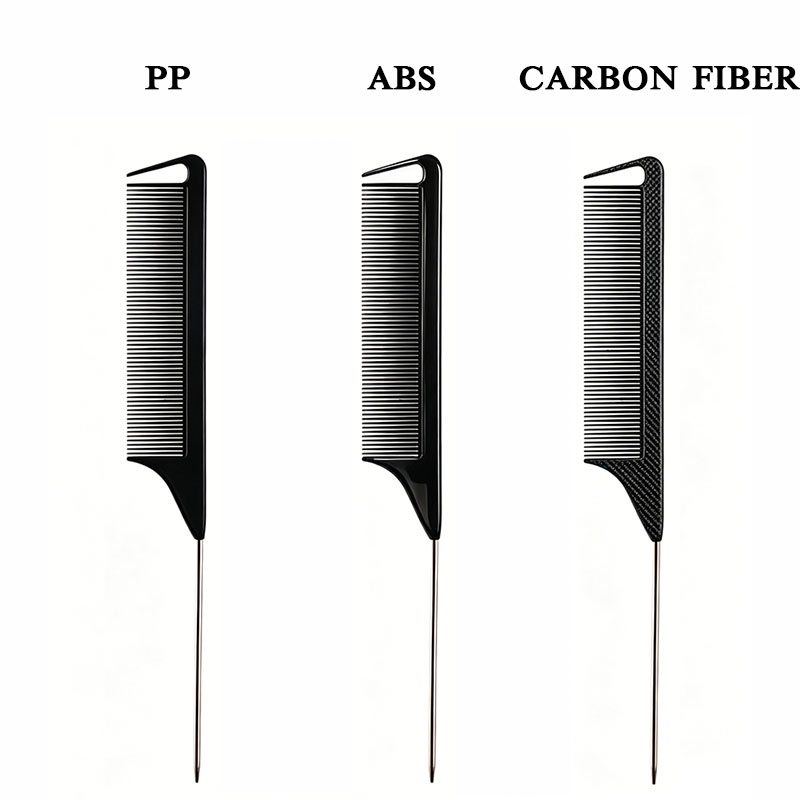
Overall, PP emphasizes low cost and weather resistance, ABS balances strength and aesthetics, and carbon fiber focuses on high-end lightweight applications.
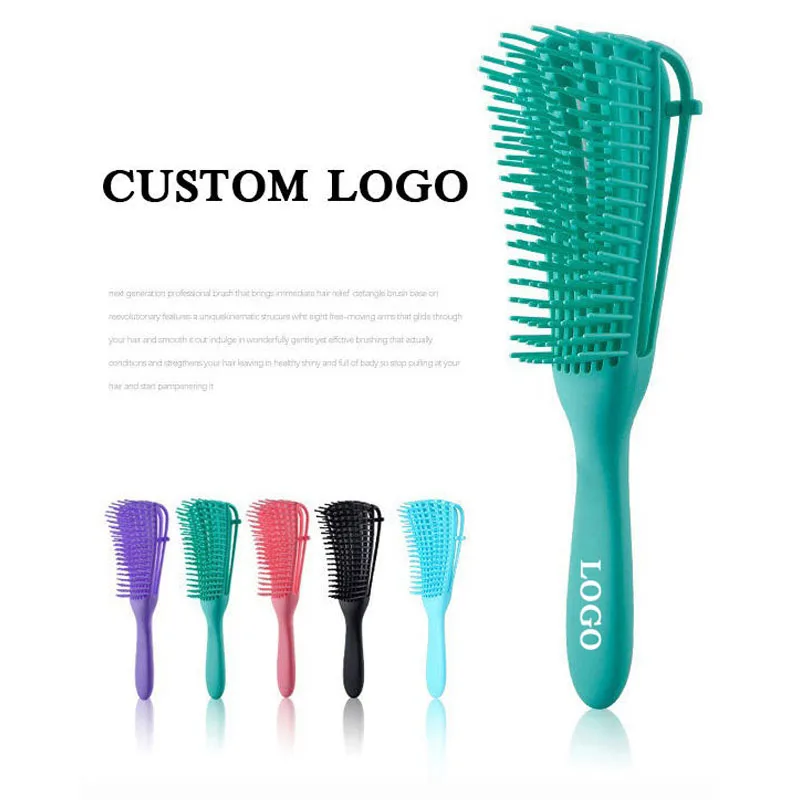
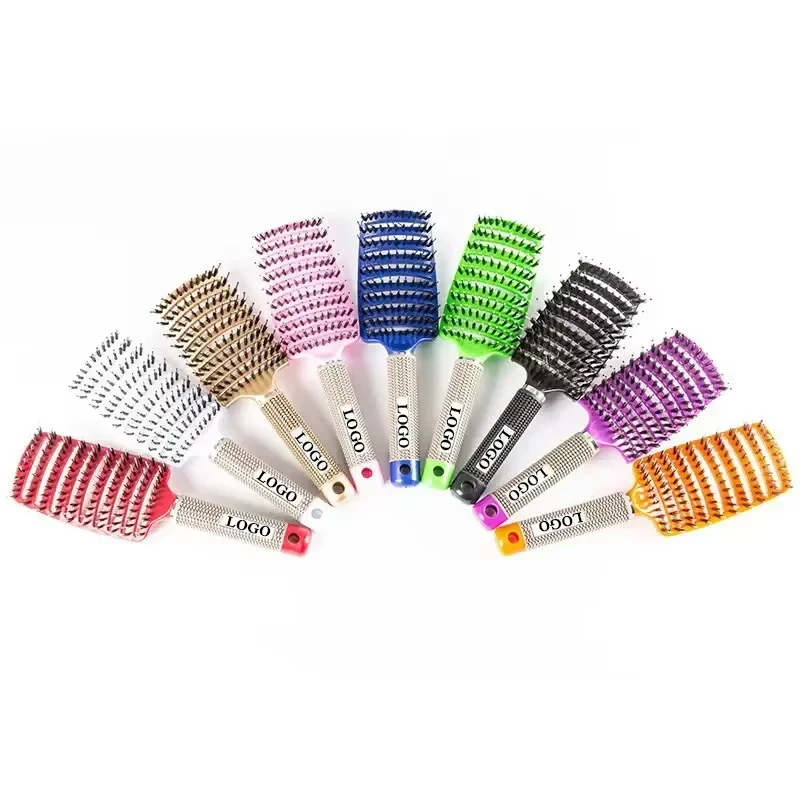
When applied to our hair comb products, PP combs are the most affordable but lack the high-temperature resistance of ABS and carbon fiber, making them suitable for home use or travel. Because the material possesses inherent elasticity, the comb teeth can bend smoothly around stubborn knots rather than snapping off, protecting the hair and scalp from harsh pulling. However, due to its lower heat deflection threshold, a PP comb cannot withstand the continuous, localized heat from high-powered professional hair dryers without softening over time. This makes these combs perfectly suited for consumer retail markets, daily family grooming, promotional brand giveaways, and disposable hotel or airline travel kits where budget efficiency and mass volume are the primary objectives.
Compared to PP, ABS combs offer better heat resistance and are more affordable than carbon fiber, making them a more cost-effective choice for standard hair salons. The superior structural rigidity of ABS ensures that the comb spine and teeth remain perfectly straight and aligned during intensive professional styling sessions. Additionally, its smooth finish and resistance to oils and styling products mean it can easily handle daily contact with various hair chemicals without deteriorating or losing its surface gloss. This provides salon owners and beauty brands with a durable, professional tool that delivers a premium look and comfortable tactile grip at a highly reasonable wholesale price point.
Carbon fiber combs excel in both heat resistance and hardness compared to PP and ABS, but they come at a significantly higher price due to the expensive composite raw materials and complex manufacturing processes involved. Reinforced by carbon fibers, these combs easily withstand the extreme temperatures generated by heavy-duty salon blow dryers, flat irons, and curling tools without any deformation. They are also naturally anti-static, eliminating frustrating frizz and flyaways during precision cutting. Furthermore, they are completely chemically inert, making them entirely immune to the harsh elements found in hair dyes, bleaching agents, and perming lotions. They are generally suited for professional hairstyling competitions, high-end luxury boutique salons, and B2B customers with extremely high quality requirements who refuse to compromise on tools.
 Hot News
 EN
EN