EN
EN


Why Hair Comb Selection Matters in Professional Salons
In a professional salon environment, the hair comb is one of the most frequently used tools, yet its selection is often overlooked. The right hair comb influences styling precision, client comfort, and even the longevity of the styling result. Salons that standardize on purpose-built combs rather than generic retail alternatives typically report fewer snagging incidents, reduced frizz, and faster sectioning during complex services such as coloring and perming. For salons sourcing combs in volume, understanding the relationship between material, tooth geometry, and application is essential to achieving consistent outcomes across diverse hair types.
Understanding Hair Comb Materials and Their Performance
Hair combs are manufactured from several primary materials, each suited to different salon tasks. Plastic combs, typically injection-molded from acrylonitrile butadiene styrene (ABS) or polypropylene, offer lightweight handling and are the most cost-effective option for general sectioning. Nylon combs provide higher heat resistance and flexural strength, making them suitable for use with blow dryers and flat irons. Rubber-infused and anti-static combs incorporate carbon or rubber compounds that dissipate electrostatic charge, which is particularly valuable when working with fine, flyaway hair or in low-humidity environments. Manufacturers with in-house injection molding capabilities, such as Yiwu Zhichao Cosmetics Co., Ltd., can produce combs across all of these material categories under one roof, ensuring consistent quality control from raw resin to finished product.
Matching Comb Geometry to Salon Services
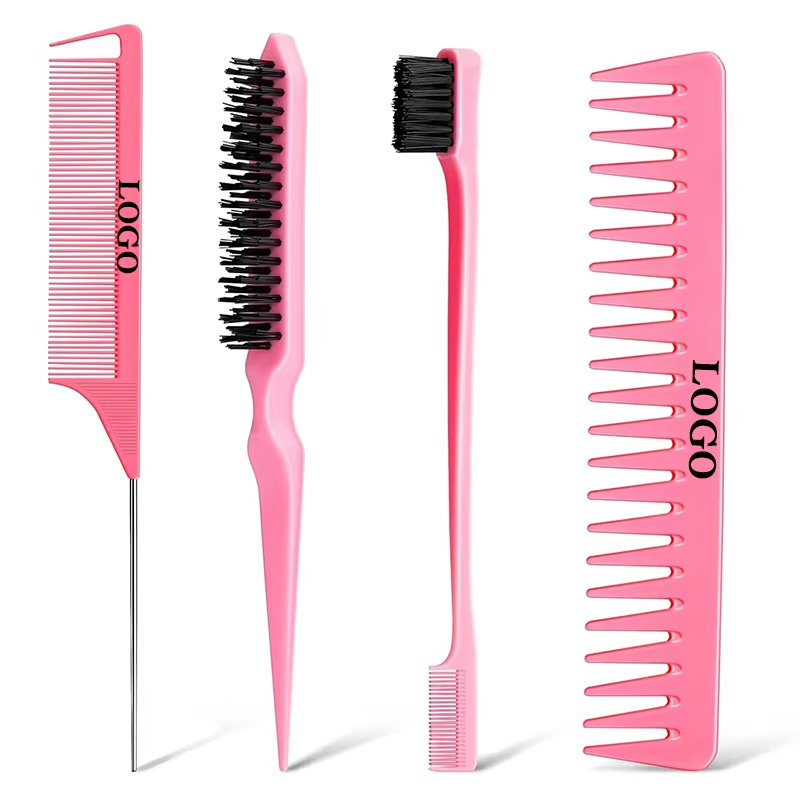
The geometry of a hair comb, specifically tooth spacing, tooth length, and spine curvature, directly determines its best-fit application. Wide-tooth combs are preferred for detangling wet hair and distributing conditioning treatments, as the spacing minimizes breakage on vulnerable, saturated strands. Fine-tooth combs, including styling and bang-combing variants, enable precise sectioning and smooth finishes for updo construction and men's grooming. Massage combs, which feature rounded, ball-tipped teeth, stimulate the scalp during shampoo and treatment services, enhancing client comfort and perceived service value. Folding and princess-style combs offer portability for mobile stylists and on-set work. Selecting a range of geometries allows a salon to cover detangling, styling, treatment, and finishing without compromising on technique.
Anti-Static and Specialty Features That Improve Client Experience
Static buildup is a persistent challenge in salons, particularly during dry seasons or when working with chemically treated hair. Anti-static hair combs are engineered with conductive additives or surface treatments that reduce electrostatic charge accumulation, resulting in smoother passes and less flyaway after styling. This feature is especially relevant for salons serving clients with fine, color-treated, or chemically straightened hair, where friction damage can compromise cuticle integrity. Additional specialty features such as heat-resistant construction for thermal services, ergonomic handles for extended use, and multi-row bristle configurations for smoothing further expand the functional range of a single tool. When evaluating suppliers, salons should request material data sheets and, where possible, conduct in-salon trials to verify that anti-static claims hold under real working conditions.
Sourcing Considerations: MOQ, Customization, and Certification
For salons and distributors purchasing hair combs at scale, several sourcing factors determine total value beyond unit price. Minimum order quantities (MOQs) affect how many SKUs a salon can realistically test before committing to volume; suppliers offering low MOQs, such as 100 pieces, enable smaller operators to pilot new products without excessive inventory risk. Customization options, including branded color matching, custom tooth configurations, and private-label packaging, allow salons and distributors to differentiate their retail or back-bar offerings. Certification is a non-negotiable indicator of social and quality compliance: BSCI, WCA, and ISO9001 certifications signal that a supplier adheres to documented labor, environmental, and quality-management standards. A practical sourcing scenario illustrates the point: a North American distributor seeking a private-label anti-static comb line identified a supplier with injection molding and mold development capabilities, a 100-piece MOQ, and BSCI certification. This combination allowed the distributor to launch a branded comb range with validated anti-static performance, full compliance documentation, and minimal upfront inventory exposure.
Caring for and Maintaining Salon Hair Combs
Proper maintenance extends the service life of salon combs and preserves hygiene standards between clients. Combs should be cleaned of hair and product residue after each service, using warm water and a mild surfactant, then dried fully before storage. Plastic and nylon combs can be sanitized with alcohol-based solutions, while rubber or anti-static variants may require gentler, manufacturer-recommended cleaners to avoid degrading conductive additives. Periodic inspection for bent, chipped, or missing teeth is critical, as damaged combs can snag hair and cause breakage. Establishing a replacement schedule based on usage volume rather than waiting for visible damage helps salons maintain consistent tool performance and client comfort across all service stations.
Cost vs. Value: Understanding Total Cost of Ownership
When evaluating hair comb options, salon managers and distributors should look beyond the unit price to calculate total cost of ownership. A lower-priced comb that warps after two months of heat exposure, loses teeth under daily stress, or fails to deliver anti-static performance under salon conditions ultimately costs more per service than a slightly higher-priced alternative built from durable materials. Factors such as warranty terms, replacement availability, and the supplier's ability to deliver consistent quality across reorders all influence the long-term value equation. Distributors who track return rates and client feedback across comb SKUs can identify which material and geometry combinations deliver the lowest cost per satisfactory service, providing a data-driven basis for future purchasing decisions and private-label development.
Frequently Asked Questions
What type of hair comb is best for detangling wet hair?
A wide-tooth comb with smooth, rounded teeth is best for detangling wet hair. Wide spacing reduces tension on saturated strands, which are more elastic and prone to breakage when wet. Look for anti-static or rubber-infused options if clients have fine or chemically treated hair.
How often should salon combs be replaced?
Under daily professional use, salon combs should be inspected weekly and typically replaced every three to six months, depending on usage volume and material. Signs that indicate immediate replacement include bent teeth, chipped edges, or a rough surface texture.
Are anti-static combs worth the higher cost for salon use?
For salons working with fine, color-treated, or chemically processed hair, anti-static combs reduce flyaway and friction-related cuticle damage, which can improve both the styling result and client comfort. The performance benefit justifies the modest price difference for most professional environments.
Table of Contents
- Why Hair Comb Selection Matters in Professional Salons
- Understanding Hair Comb Materials and Their Performance
- Matching Comb Geometry to Salon Services
- Anti-Static and Specialty Features That Improve Client Experience
- Sourcing Considerations: MOQ, Customization, and Certification
- Caring for and Maintaining Salon Hair Combs
- Cost vs. Value: Understanding Total Cost of Ownership
- Frequently Asked Questions