EN
EN


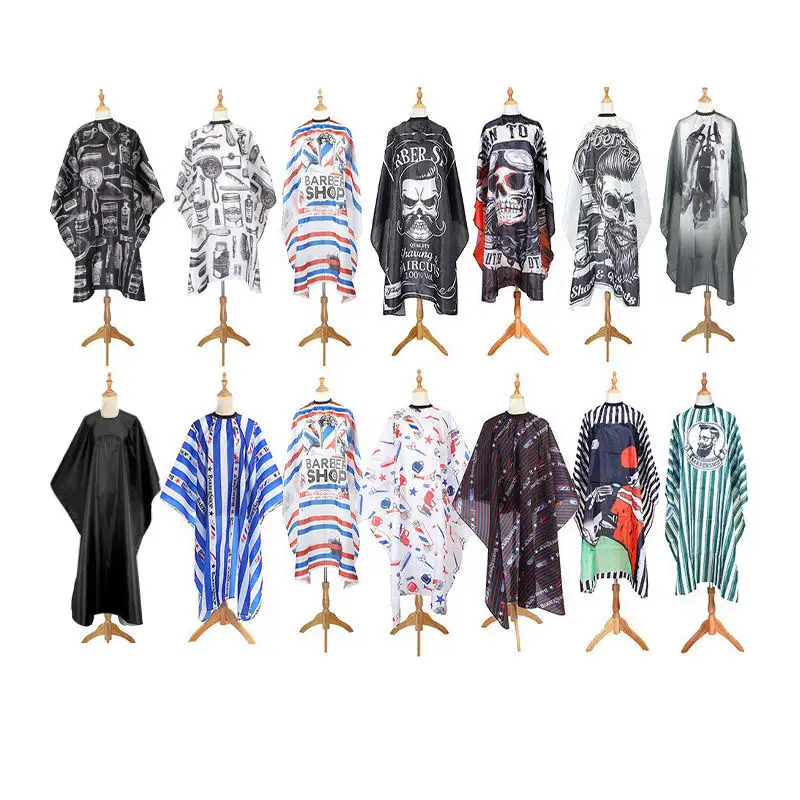
What Makes a Quality Barber Cape
A barber cape is a fundamental tool in any professional grooming environment, serving both functional and hygienic purposes during hair cutting, coloring, and styling procedures. For salon owners, barbers, and grooming professionals, selecting the right cape directly impacts client comfort, workflow efficiency, and overall service quality. A well-constructed barber cape prevents hair clippings from reaching clothing, protects skin from chemical residues during coloring treatments, and maintains a clean, professional appearance throughout the workday. The global salon apparel market continues to expand as grooming standards rise, making it increasingly important for buyers to understand the construction, material, and design factors that separate a standard cape from one engineered for daily professional use.
Professional grooming capes must withstand frequent washing, chemical exposure, and repeated handling without degrading. Key indicators of quality include water-resistant fabric treatment, secure closure mechanisms, and reinforced stitching at high-stress points. Manufacturers with experience in salon tool production, such as Yiwu Zhichao Cosmetics Co., Ltd., which has produced grooming accessories since 2007, understand that capes used in high-traffic salons face substantially more wear than consumer-grade alternatives. Their vertically integrated production facility, spanning 11,387 square meters with an in-house injection molding workshop, enables coordinated manufacturing of cape hardware alongside complementary grooming tools.
Key Materials and Construction Features
The material composition of a barber cape determines its performance across several critical dimensions: water resistance, breathability, static control, and longevity. Polyester-based fabrics with polyurethane coatings are widely used for their balance of durability and cost-effectiveness. These materials prevent water and chemical solutions from penetrating through to client clothing while remaining lightweight enough for extended wear. Higher-end capes may incorporate nylon blends that offer improved tear resistance and a smoother surface that facilitates easy removal of hair clippings between clients.
Construction details matter as much as material choice. Flat-felled seams reduce fraying and extend product life, while rounded neck openings with adjustable snap or hook-and-loop closures accommodate diverse neck sizes without causing discomfort. The closure hardware itself should be rust-resistant, as frequent exposure to water and salon chemicals accelerates corrosion in low-quality components. Capes produced under certified quality management systems, such as ISO9001-certified facilities, typically demonstrate more consistent construction standards across production batches, reducing the variability that bulk buyers encounter when sourcing from uncertified suppliers.
Sizing and Coverage Considerations
Barber capes come in several standard sizes, and selecting the appropriate dimensions depends on the services offered. For general hair cutting, a cape measuring approximately 140 cm by 160 cm provides sufficient coverage for most adult clients. Coloring services may require larger capes or specialized designs with additional neck protection to prevent dye from reaching the collar area. Children's grooming services call for smaller capes that fit properly without excessive fabric gathering, which can cause discomfort and restrict movement during the procedure.
The cut and drape of the cape also influence its effectiveness. A well-designed cape should contour smoothly around the shoulders and drape evenly on both sides without gaps that allow hair clippings to escape. Some professional capes feature side snaps or elasticized sections that create a more tailored fit, particularly useful during precision cuts where the stylist needs clear access to the neckline. Buyers sourcing capes for multiple salon locations should consider ordering a range of sizes to accommodate varied client demographics, and suppliers offering flexible minimum order quantities, such as the 100-piece MOQ available from Zhichao, make it practical to test different sizes before committing to volume orders.
Maintenance and Durability Factors
A barber cape represents a recurring investment for salon operations, and its usable lifespan depends heavily on maintenance practices and material quality. Capes should be machine washable in warm water with mild detergent, as harsh chemicals and high-heat drying can degrade waterproof coatings over time. Quick-dry fabrics are preferred in high-volume salons where capes are rotated frequently throughout the day. Static buildup is another concern, particularly in dry climates or during winter months, and capes treated with anti-static finishes help prevent hair clippings from clinging to the fabric surface.
For bulk buyers and procurement managers, evaluating cape durability requires looking beyond the product specification sheet. Requesting sample units for accelerated wear testing, involving repeated washing cycles, chemical exposure simulations, and mechanical stress tests, provides practical insight into real-world performance. Manufacturers with BSCI and WCA certifications maintain documented production standards that contribute to more predictable product quality, and their audit records can offer additional assurance regarding material consistency and workplace conditions throughout the supply chain.
Case Study: OEM Cape Production for Retail Chains
A practical example illustrates how manufacturer capabilities translate into buyer value. A retail chain sourcing barber capes and complementary grooming tools worked with Zhichao to develop a custom cape line featuring branded snap closures and color-matched packaging. The project leveraged the manufacturer's in-house mold development to create custom closure hardware that matched the brand's visual identity, while the injection molding workshop produced the components to exact specification. Quality consistency across 10,000 units was maintained through ISO9001-certified production processes, and the 99 percent on-time fulfillment rate ensured the retail launch proceeded on schedule. This case demonstrates how vertically integrated manufacturing supports both product customization and reliable delivery for bulk procurement orders.
Sourcing Considerations and Supply Chain Evaluation
When evaluating potential suppliers for salon capes, buyers should request detailed product specifications including fabric weight, coating type, closure mechanism specifications, and available color options. Understanding a supplier's monthly production capacity helps assess whether the manufacturer can scale to meet growing demand without compromising lead times. Zhichao maintains output exceeding 5 million RMB monthly with 47 production workers, providing capacity for both initial trial orders and ongoing supply agreements. Custom branding through screen printing, embroidery, or woven labels is commonly offered by manufacturers serving the salon supply market, and the company's experience as an OEM partner for MINISO demonstrates proven capability in meeting retail-brand specifications for material standards and packaging requirements.
Frequently Asked Questions
What fabric is best for a barber cape?
Polyester with a polyurethane coating is the most common choice for professional barber capes due to its water resistance, durability, and cost-effectiveness. Nylon blends offer enhanced tear resistance for high-volume salon environments where capes face frequent mechanical stress.
How often should salon capes be replaced?
With proper maintenance, quality barber capes typically last 12 to 18 months in a busy salon. Signs of wear include waterproof coating degradation, closure mechanism failure, and seam fraying. Rotating multiple capes throughout the day extends the individual lifespan of each unit.
Can barber capes be customized with salon logos?
Yes, most manufacturers offering OEM and ODM services provide customization options including screen printing, embroidery, and woven labels. Minimum order quantities for custom-branded capes typically start at 100 to 500 pieces depending on the decoration method and complexity of the design.