EN
EN

Understanding Hair Brush Durability Requirements
A hair brush used in a professional salon environment endures significantly more stress than a consumer-grade tool. Daily exposure to heat styling, chemical treatments, wet hair detangling, and continuous handling demands construction that maintains structural integrity over hundreds of uses. For salon owners, distributors, and procurement managers, understanding the factors that contribute to brush durability is essential when sourcing tools that deliver consistent performance and reasonable cost-per-use. Salon brushes must resist bristle deformation, handle fracture, and cushion pad deterioration while maintaining their functional characteristics, including detangling efficiency, smoothing capability, and static control, throughout their service life.
The distinction between consumer and professional-grade brushes lies in material selection, construction methods, and quality consistency. Manufacturers specializing in salon tool production, such as Yiwu Zhichao Cosmetics Co., Ltd., apply injection molding expertise developed since 2007 to produce brush bodies that withstand repeated impact and thermal stress. Their in-house mold development capability allows for precise control over handle thickness, vent placement, and bristle anchor design, factors that directly influence how long a brush maintains its functional shape under professional use conditions. With 22 registered trademarks and 11 intellectual property items, the company has invested in protecting its tool designs, reflecting a commitment to product development that benefits buyers seeking differentiated inventory.
Material Selection for Salon-Grade Brushes
The materials used in a professional hair brush affect not only durability but also the quality of the styling result. Bristle materials commonly include nylon, boar hair, and blended configurations, each offering distinct performance characteristics. Nylon bristles provide rigidity and detangling power suitable for thick and coarse hair types, while boar bristles distribute natural oils and create a smooth finish preferred for fine and straight hair. Mixed bristle brushes combine these properties, making them versatile tools for salons serving diverse clientele with varying hair textures and styling needs.
Brush bodies and handles are typically produced through injection molding using ABS, polypropylene, or nylon-based polymers. The choice of polymer affects impact resistance, heat tolerance, and overall weight, all critical factors for tools used continuously throughout a full workday. Manufacturers with ISO9001-certified quality management systems maintain consistent material specifications across production runs, reducing the batch-to-batch variability that can compromise tool reliability. Zhichao's vertical integration from polymer selection through bristle insertion and final assembly enables coordinated quality control at each production stage, supported by their 11,387-square-meter facility and team of 47 production workers.
Brush Types and Their Professional Applications
Different salon services require specific brush types, each with distinct durability considerations. Paddle brushes, featuring a wide flat base, are essential for detangling long hair and smoothing before blow-drying. Their large surface area distributes tension evenly, reducing breakage, but the cushion pad must maintain resilience through repeated daily use. Round brushes, used for creating volume and curl during blow-drying, face high thermal stress from direct contact with heated hair and must retain bristle alignment and barrel integrity over hundreds of sessions. Vent brushes, designed for accelerated drying through airflow channels, require robust construction as they are frequently used on wet hair under tension.
Styling brushes, including those produced by Zhichao under their BEISSY and DAIOU brands, serve precision work such as fringe shaping and detailing. These brushes typically feature smaller head dimensions and denser bristle arrangements. For salons offering specialized services, complementary tools such as anti-static folding combs and three-row styling brushes round out the tool collection, providing instruments for finishing and refinement work. When sourcing a complete tool kit, buyers benefit from working with a single manufacturer capable of supplying multiple brush types and complementary accessories, ensuring consistent quality standards and simplified procurement logistics.
Anti-Static and Detangling Technologies
Static electricity is a persistent challenge in salon environments, particularly during dry seasons or when working with synthetic fabrics and heated styling tools. Anti-static hair brushes incorporate features such as ion-infused bristles, conductive materials in the brush body, or surface treatments that reduce static charge buildup during brushing. For professionals, static-free brushing means smoother results, less flyaway hair, and a more polished finish that satisfies clients and reduces the need for additional finishing products. Manufacturers offering anti-static solutions often apply these treatments across their product range, including combs and styling brushes, creating a coordinated tool system that addresses static consistently.
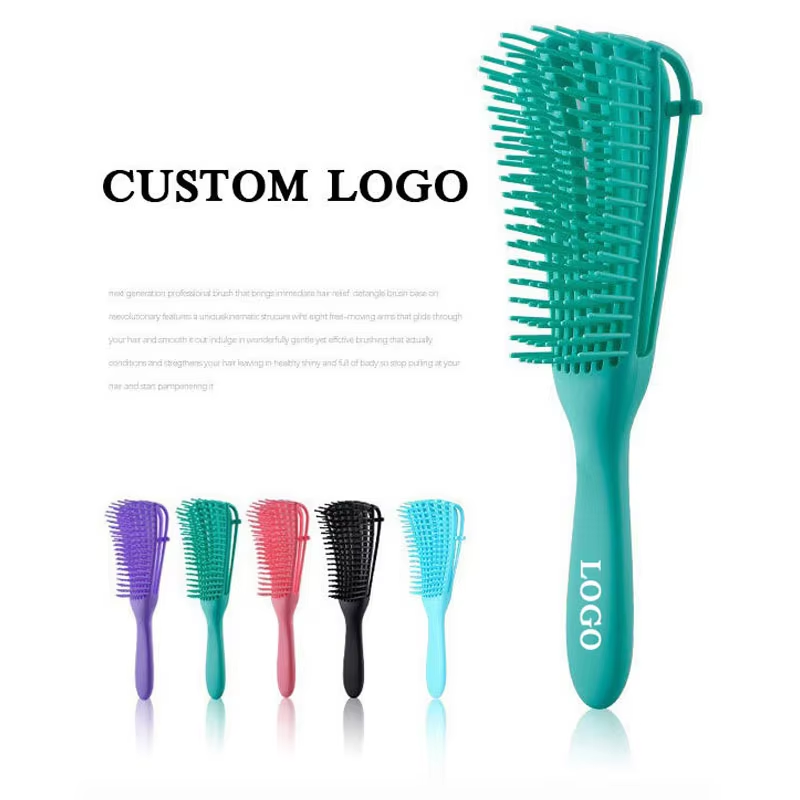
Detangling performance depends on bristle flexibility, spacing, and tip design. Ball-tipped bristles prevent scalp irritation while effectively separating hair strands, and variable bristle heights accommodate different hair densities without excessive pulling. The cushion pad beneath the bristles absorbs pressure, protecting both the scalp and the brush structure from excessive force during aggressive detangling sessions. In high-volume salons, brushes that detangle efficiently reduce service time and minimize hair breakage, contributing to both client satisfaction and operational efficiency. These performance factors should be evaluated through hands-on testing before committing to volume purchases.
Manufacturing Quality and Consistency
For bulk buyers, the reliability of a hair brush across large order quantities depends on the manufacturer's quality management infrastructure. Consistent bristle density, uniform handle dimensions, and reliable adhesive bonding between components are measurable indicators of production discipline. Manufacturers holding BSCI and WCA certifications undergo regular audits that verify workplace standards and production processes, providing buyers with additional confidence in supply chain reliability. Zhichao's status as a 2024 provincial-level technology-based SME and its tax rating of A reflect operational stability that supports long-term supply relationships and consistent product quality.
Quality verification at the sourcing stage should include sample testing under simulated salon conditions, including repeated heat exposure, wet-use cycling, and mechanical stress on bristle anchors. A manufacturer's willingness to provide test samples and accommodate specification adjustments is often indicative of their OEM and ODM capability. With a minimum order quantity of 100 pieces, Zhichao enables buyers to conduct meaningful product evaluation before committing to volume orders, reducing the risk of investing in tools that fail prematurely under professional use conditions. This approach aligns with prudent procurement practices across the salon supply industry.
Sourcing Considerations and Practical Application
When sourcing hair brushes for salon distribution or retail, buyers should evaluate suppliers on production capacity, customization options, and fulfillment track record. Zhichao's monthly output exceeding 5 million RMB and 99 percent on-time fulfillment rate provide operational confidence for orders ranging from initial trials to ongoing supply agreements. Customization options, including handle color, bristle configuration, bristle material blends, and branded packaging, allow distributors to develop differentiated product lines that stand out in competitive markets. The company's experience as an OEM partner for MINISO demonstrates proven capability in meeting retail-brand specifications for product consistency, material standards, and packaging requirements.
A practical sourcing scenario illustrates this process in action. A distributor seeking a durable styling brush line for salon supply stores collaborated with Zhichao to develop brushes featuring reinforced bristle anchors and ergonomic handles produced through custom injection molds. The project utilized the manufacturer's mold development workshop to prototype several handle designs, and quality testing across multiple production batches confirmed consistent bristle retention rates above industry benchmarks. The distributor's initial order of 500 pieces per brush type served as a market test, with the 100-piece MOQ providing flexibility to adjust the product mix based on early sales data. This scenario demonstrates how a manufacturer's technical capabilities and flexible ordering terms support informed purchasing decisions for professional brush buyers.
Frequently Asked Questions
What type of hair brush is most durable for salon use?
Nylon bristle brushes with injection-molded ABS or polypropylene handles offer the highest durability for professional salon environments. The combination of rigid bristles and impact-resistant handles withstands daily heat exposure, wet detangling, and repeated mechanical stress.
How long should a professional hair brush last?
A quality professional hair brush should last 6 to 12 months in a busy salon, depending on usage frequency, maintenance practices, and the types of services performed. Signs of wear include bristle deformation, cushion pad compression, and handle surface degradation.
Can salon hair brushes be customized for a brand?
Yes, manufacturers offering OEM and ODM services provide customization including handle color, bristle material blends, branding through pad printing or embossing, and custom packaging design. Minimum order quantities typically start at 100 to 500 pieces depending on the customization scope.