EN
EN


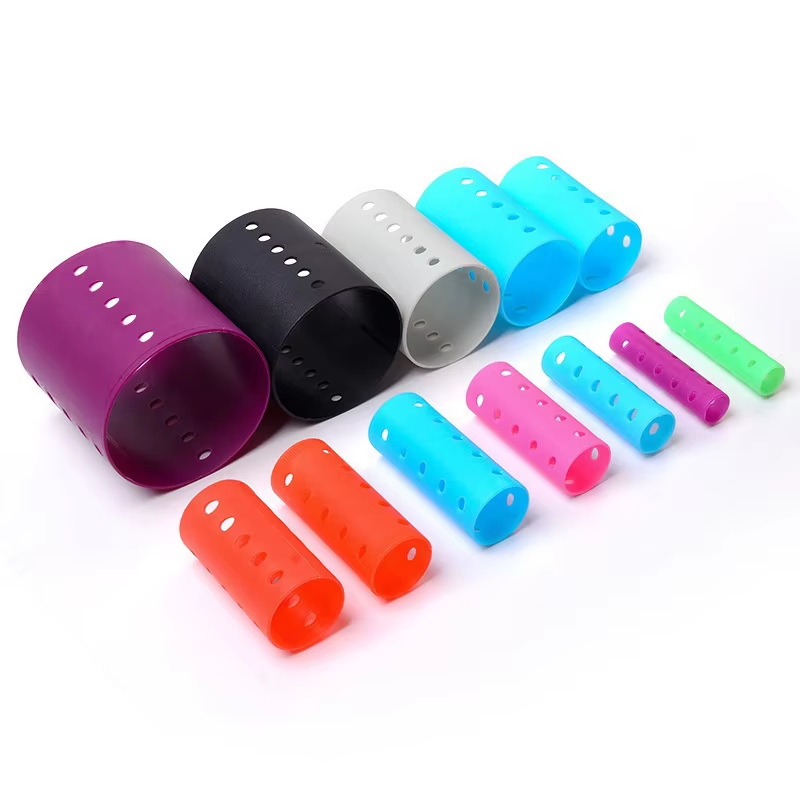
Large hair rollers have become a staple tool for creating the voluminous, bouncy blowout looks seen across salons and social media. While curling irons rely on direct heat to reshape the hair, a large diameter hair roller works with the natural cooling process to set smooth, sweeping curves and visible lift at the root. The result is the soft, polished movement that defines a professional blowout. Understanding why bigger rollers deliver this effect, and how roller sizing, material, and construction influence the outcome, helps stylists, beauty brands, and sourcing buyers make better decisions. As a manufacturer producing hair rollers since 2007 for markets including the United States, and as an OEM partner for brands such as MINISO, Yiwu Zhichao Cosmetics has watched large roller formats grow into a core category for salon-oriented product lines.
The Science Behind Roller Diameter and Volume
The core principle is geometry. The diameter of a hair roller determines the radius of the curve it sets into the hair. Rollers under 20 mm create tight, defined curls, while a large hair roller in the 30 mm to 60 mm range creates wide, gentle bends. When hair is wrapped around a large roller and cools in that position, the hydrogen bonds inside each strand reset around the wider curve, producing volume and soft movement instead of spiral texture. This is exactly the geometry behind the classic blowout: large rollers lift hair away from the scalp to create root elevation while keeping the lengths smooth. For fine or flat hair, the sizing advantage is especially valuable, because the broad curve visually increases apparent density without adding heat damage.
How Large Rollers Create the Signature Blowout Effect
A blowout is defined by three characteristics: root lift, smooth mid-lengths, and a softly curled or turned-under end. Large rollers deliver all three in a single setting step. Because the roller sits close to the scalp and supports a wide section of hair, it creates elevation at the root that blow drying alone cannot hold for long. The smooth barrel surface presses the cuticle flat as the hair wraps around it, adding shine and reducing frizz. Finally, the wide diameter turns the ends under or produces a loose, face-framing sweep rather than a tight coil. Stylists often alternate roller directions, rolling back from the face at the crown and forward at the front hairline, to build the balanced volume clients associate with a salon finish. Very few heated tools replicate this combination as gently, which is why the large hair roller remains a fixture behind the salon chair.
Why Salons Rely on Large Rollers for Professional Results
Salons favor large rollers for practical reasons, not just stylistic ones. Roller sets are time-efficient: a stylist can roll an entire head, place the client under a hooded dryer, and finish with a quick brush-out. The method is also lower risk than repeated flat iron or curling wand passes, making it suitable for color-treated or fragile hair. From a business perspective, roller-based blowouts produce consistent, repeatable results across different stylists, which protects service quality. Durability matters too. Professional rollers must survive daily sanitization, so salons look for injection-molded plastic or velvet-coated rollers from manufacturers with quality systems such as ISO9001 certification. Factories with their own mold development and injection molding workshops can control wall thickness, seam quality, and surface finish, and these details decide whether a roller survives three hundred salon clients or thirty.
Materials and Design Features That Affect Performance
Not all large rollers behave the same way. Velvet-coated plastic rollers grip the cuticle gently and look the part in a salon setting. Nylon self-grip rollers hold hair without pins and allow airflow for faster drying. Sponge self-adhesive rollers need no clips at all and hold hair at any angle, which is why they anchor so many heatless curling kits aimed at home users. Ventilation holes, rounded edges, and a consistent barrel diameter are small manufacturing details with outsized effects on performance and comfort. Buyers sourcing rollers for resale should also evaluate foam density, adhesive longevity, and colorfastness, because repeated use and humidity exposure are the most common failure points. Requesting physical samples and testing them across several hair types remains the most reliable way to verify these attributes before committing to volume production.
A Practical Sourcing Scenario: Building a Blowout Roller Line
Consider a mid-sized beauty brand planning a blowout starter kit for the US market. The kit needs large rollers for crown volume, medium rollers for the sides, and a few small rollers for face-framing ends. Working with a vertically integrated manufacturer, the brand can source the full size range from a single supplier with consistent colors, materials, and packaging. In a typical scenario, a supplier such as Yiwu Zhichao Cosmetics, which keeps around 100,000 sets of its Daiou nylon self-adhesive curlers in stock across three sizes, holds BSCI and WCA certifications, and produces OEM orders for MINISO, supports this kind of mixed-size kit with a minimum order of 100 pieces per item. That low MOQ lets a brand test a blowout kit concept with limited inventory risk and scale up once sell-through data confirms demand. Many successful hair roller lines start exactly this way: a small certified order, real customer feedback, and a supplier able to grow alongside the brand.
How to Choose Large Hair Rollers for Your Needs
Whether you are a stylist upgrading a salon cart or a brand building a product line, the selection logic is similar. Match roller diameter to hair length: shorter hair needs 30 to 35 mm rollers to avoid awkward bends, while long, heavy hair benefits from 50 mm and above to achieve visible lift. Check the material against the use case, choosing velvet for salon blowouts, self-adhesive sponge for retail and travel kits, and nylon for damp setting. If you plan to resell, confirm the supplier holds relevant certifications and can demonstrate production consistency. Review specifications such as roller diameter, pack counts, and color options before ordering, since these details define how the product is marketed. Comparing product options side by side, ideally with samples in hand, is the most dependable path to a roller choice you will be happy with.
Questions and Answers
Q: What size hair roller is best for a blowout?
A: For most hair lengths, large hair rollers between 40 mm and 50 mm create the classic bouncy blowout. Shorter hair works better with 30 to 35 mm rollers, while long or heavy hair benefits from 55 mm and above to achieve visible root lift.
Q: Do large rollers work on fine hair?
A: Yes. Fine hair often responds well to large rollers because the wide diameter creates the appearance of density and lift. Rolling hair while it is still slightly warm from a blow dryer, then letting it cool completely, sets the volume more effectively.
Q: Can large rollers be used without heat?
A: Yes. Self-adhesive sponge rollers and other heatless formats can be applied to damp hair and worn for several hours or overnight. The resulting curve is softer than a heat-set blowout but still delivers noticeable volume.
Table of Contents
- The Science Behind Roller Diameter and Volume
- How Large Rollers Create the Signature Blowout Effect
- Why Salons Rely on Large Rollers for Professional Results
- Materials and Design Features That Affect Performance
- A Practical Sourcing Scenario: Building a Blowout Roller Line
- How to Choose Large Hair Rollers for Your Needs
- Questions and Answers