EN
EN


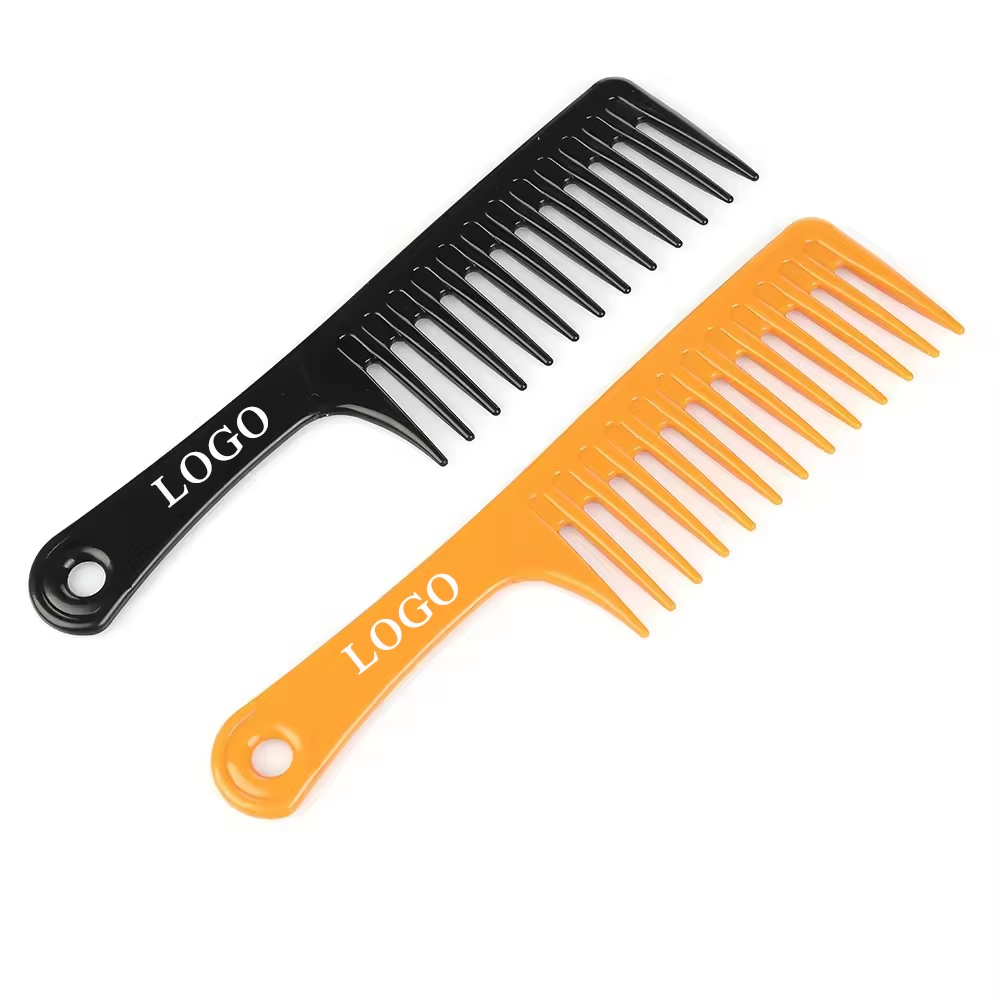
Most hair damage is not caused by shampooing or heat styling alone. A large share of split ends and snapped strands happens during the detangling step that follows washing, when hair is at its weakest. Wet hair absorbs water, the cuticle swells and the protective protein bonds inside each strand temporarily loosen, so hair that is normally strong can stretch and break far more easily. Dragging a fine-tooth comb through soaked, tangled hair forces knots apart instead of easing them open, which pulls on the hairline and leaves frayed ends behind. This is why the wide-tooth comb has become a standard tool in both home routines and professional salons: its wider spacing lets hair pass through in small groups, releasing tangles with far less tension. This guide explains the science behind wet-hair breakage, how the wide-tooth design protects strands, and what to consider when choosing a comb for wet use, whether you are buying for yourself or sourcing for a retail brand.
The Science of Wet Hair: Why Strands Are Most Vulnerable
A healthy hair strand has three layers: the cuticle, the cortex and the medulla. The cuticle is a covering of overlapping scales that protect the cortex, the layer that provides strength and elasticity. When hair absorbs water, the cuticle swells and the scales lift, leaving the cortex more exposed. The protein bonds within the cortex also weaken temporarily, so wet hair can stretch further than dry hair but snaps much more easily when pulled sharply. This is why stylists treat wet hair with extra care: combing should always start at the ends and move upward in short strokes, never yanked from the roots. The risk is even higher for curly, coily or color-treated hair, which already contains weak points from processing and needs tools that reduce tension rather than multiply it. The practical conclusion is simple: the more fragile the strand, the gentler the tool and the technique must be.
How Wide-Tooth Design Prevents Breakage
The defining feature of a wide-tooth comb is the gap between its teeth. Where a fine-tooth comb works on individual strands, a wide-tooth comb gathers several strands at once and guides them through tangles in small groups. Each tooth tip should be rounded and smooth, because a sharp or unfinished tip scratches the cuticle and catches on knots, undoing the benefit of the spacing. Wider spacing also means fewer points of contact per pass, which reduces friction and the pulling force on every single strand. A comb body with controlled flexibility adds another layer of protection: instead of transmitting pressure straight into the hair, it bends slightly and lets the teeth follow the shape of the tangle. This combination of spacing, rounded tips and flexibility is the engineering logic behind protective wet-use combs, and it is the same logic manufacturers apply when they design combs for export markets.
Choosing the Right Material for Wet-Use Combs
Material matters more on wet hair than on dry hair, because water changes how a comb grips the strand. Nylon is a common choice for wet-use combs: it is durable, smooth, and can be engineered with anti-static properties during injection molding, which reduces flyaway and helps the cuticle stay flat as hair dries. Plastic is affordable and easy to mold into almost any shape and color, but the material grade matters a great deal; brittle or low-grade plastic can form rough seams that snag wet hair. Rubber or silicone-tipped teeth add a soft, grippy feel and are often used in massage combs for the scalp and hairline. For a manufacturer, the key requirement is material consistency: a comb intended for wet use should come from a grade that does not soften, warp or lose its smooth finish after repeated contact with water. In our factory, combs are molded in-house, which allows the finish and material grade to be checked before a single unit goes into production.
How to Detangle Wet Hair Correctly
Using a wide-tooth comb is only half the solution; technique determines most of the result. Start by applying conditioner and allowing it to sit, which coats the strands and lowers friction between them. Divide the hair into manageable sections, begin at the ends, and work upward in short strokes. Hold the section above the knot with one hand so that tension stays off the scalp, and never force a wide-tooth comb through a tight tangle; instead, work the teeth in from the side and let the spacing release the knot gradually. After detangling, blot hair gently with a towel or wrap it in a microfiber cloth, because rough rubbing creates friction and frizz. These habits, combined with a well-designed wide-tooth comb, protect the hair shaft through the entire washing routine and noticeably reduce split ends over time.
Case Study: Wide-Tooth Combs for a Retail Hair Care Program
Yiwu Zhichao Cosmetics Co., Ltd. has produced injection-molded hair tools in Yiwu, Zhejiang, China since 2007, operating an 11,387 square meter plant with 80 employees, including 47 production workers. When a retail hair care brand needed a private-label wide-tooth comb line for its bath-and-body assortment, the sourcing brief specified wide spacing, rounded tips and a nylon grade able to withstand daily wet use. Because the factory runs its own injection molding workshop and mold development team, the mold was iterated in-house until the tooth spacing and tip finish matched the specification, and assembly and packaging were completed on the same site. The program covered multiple sizes and colors under one MOQ structure, and the order was fulfilled within the factory's 99% on-time fulfillment record. The lesson for buyers is practical: a supplier with in-house molding and mold development responds to design feedback far faster than one that only assembles purchased parts.
What to Look for When Sourcing Wide-Tooth Combs
When evaluating a supplier of wide-tooth combs for wet hair, review a few specification points before ordering samples. Check the tooth pitch and tip finish, because rounded tips and a consistent gap between teeth are the two features that most affect detangling comfort. Confirm the material grade and whether anti-static properties are added during molding rather than applied as a surface coating. Ask whether the factory holds certifications such as BSCI, WCA and ISO9001, which cover workplace standards and quality management. Request samples and compare several sizes, colors and handle designs, then confirm the MOQ and lead time. Manufacturers such as Zhichao offer MOQs as low as 100 pieces for custom programs, which makes it practical to test a new wide-tooth comb design with a small first batch before committing to full production.
Q&A
Q: Can I use a wide-tooth comb on dry hair?
A: Yes. A wide-tooth comb works on both wet and dry hair, although it is most valuable on wet strands. On dry hair it is a good choice for curly or thick textures, because the wide spacing preserves natural curl patterns and causes less static than fine-tooth designs.
Q: How is a wide-tooth comb different from a fine-tooth comb?
A: The gap between the teeth is the main difference. Fine-tooth combs are built for precise parting and sleek finishes on dry, straight hair, while wide-tooth combs gather hair in small groups to release tangles gently, which is why they are recommended for detangling wet hair.
Q: Does the material matter for a wet-use comb?
A: Yes. A wet-use comb should be made from a smooth, durable grade such as nylon that does not warp with repeated water contact, and ideally one with anti-static properties molded in. Brittle or low-grade plastic can develop rough seams that snag wet hair.