EN
EN


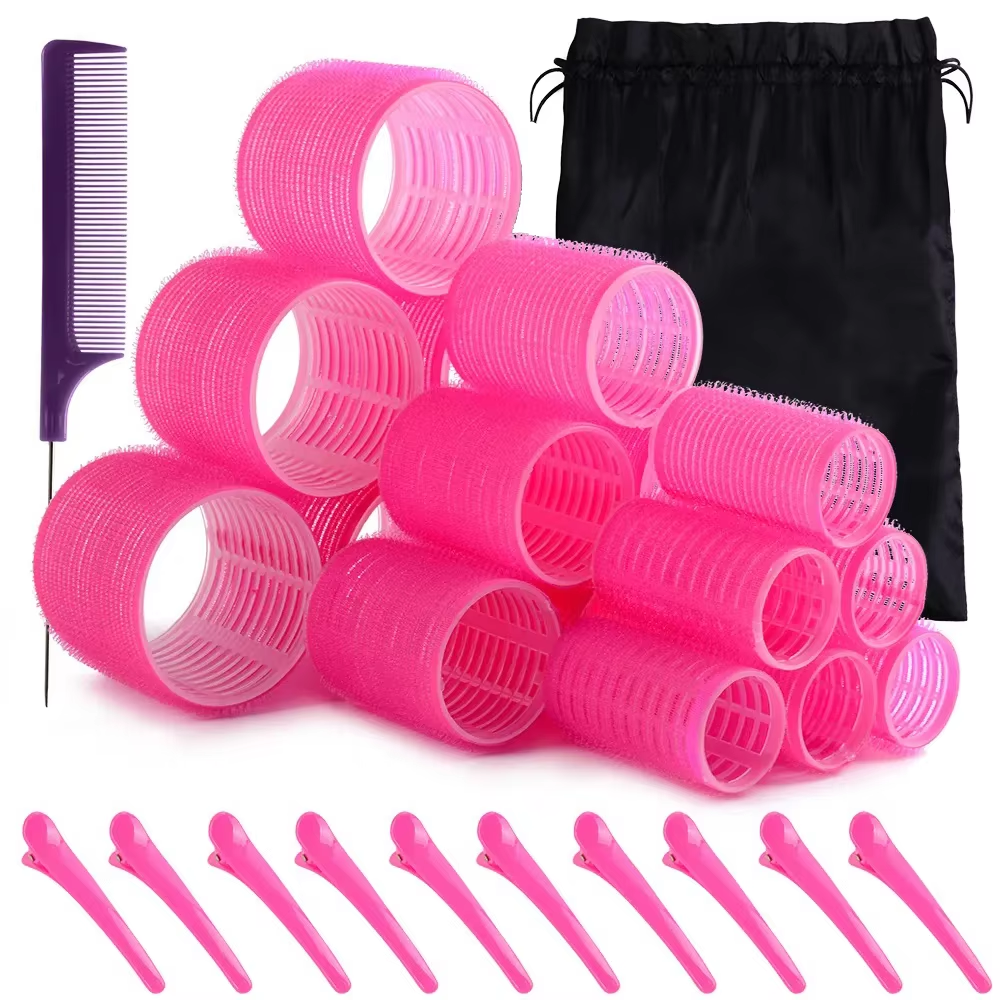
Understanding Hair Rollers for Volume Creation
Achieving voluminous curls is one of the most sought-after styling goals, and the hair roller remains the most effective tool for this purpose. Unlike curling irons that create tight, uniform spirals, rollers produce lift at the root and body throughout the hair length, resulting in the fuller, bouncier appearance that defines voluminous styling. The principle is straightforward: hair is wrapped around a cylindrical form while damp or warm, and as it cools or dries, it takes on the roller's shape. The diameter of the roller directly determines the curl size — larger rollers create loose, voluminous waves while smaller rollers produce tighter, more defined curls. Understanding this relationship between roller size and curl outcome is essential for anyone looking to maximize volume through roller-based styling techniques.
Types of Hair Rollers and Their Volume Potential
Several types of hair rollers serve different volume-building purposes. Sponge self-adhesive rollers are among the most popular for home use because they require no clips — the roller bends and holds itself in place, making them ideal for overnight heatless curling. Their soft foam core cushions the hair during sleep, preventing the discomfort associated with harder roller materials. Nylon rollers feature a mesh or bristle surface that grips hair securely and allows air circulation, making them suitable for blow-dry styling where heat activation is needed. Plastic rollers provide a firm, smooth surface that creates uniform, salon-quality curls and works well with hooded dryers. Heatless sleep rollers, a newer category, are designed specifically for comfortable overnight wear and often combine a flexible wire core with a soft fabric covering. Each roller type offers distinct advantages for volume creation, and many stylists combine multiple types within a single styling session to achieve varied curl patterns and maximum root lift.
Preparing Your Hair for Maximum Volume
Proper preparation significantly impacts the volume achievable with hair rollers. Start with freshly washed hair, as natural oils and product buildup weigh hair down and reduce lift. Apply a volumizing mousse or root-lifting spray to damp hair, focusing the product at the roots where lift is most needed. Detangle thoroughly with a wide-tooth comb or a styling brush to ensure even product distribution and prevent tangles that could cause uneven curl formation. If using heated rollers, hair should be completely dry before rolling — applying heat to damp hair causes frizz and can damage the hair cuticle. For sponge rollers and other heatless methods, hair should be slightly damp but not wet, as fully saturated hair takes too long to set and may not hold the curl by morning. The condition of the hair ends also matters; split or damaged ends resist curling and should be trimmed regularly to maintain optimal styling results and consistent volume.
Step-by-Step Rolling Technique for Voluminous Curls
The rolling technique determines whether you achieve flat, lifeless results or full, voluminous curls. Begin at the crown, where volume is most visible. Take a section of hair approximately the same width as your roller, hold it at a ninety-degree angle from the scalp to maximize root lift, and wrap the ends around the roller first. Roll downward toward the scalp, maintaining consistent tension throughout. For maximum volume, overdirect the section slightly — pull it forward past its natural fall position before rolling, which creates extra lift when the roller is released. For sponge self-adhesive rollers, simply bend the ends to secure once the roller reaches the scalp. For nylon and plastic rollers, use a clip to anchor the roller in place, positioning it parallel to the scalp to avoid bulk. Work systematically from the crown to the sides and then to the back, using larger rollers at the crown for volume and smaller rollers at the sides for curl definition. Once all rollers are in place, allow the hair to set completely — at least twenty minutes for heated rollers and overnight for heatless methods — before removing them gently in the reverse order of application.
Heatless vs. Heated Roller Methods Compared
Both heatless and heated roller methods can produce voluminous curls, but they differ in several important ways. Heated rollers offer faster results and longer-lasting curls because the heat temporarily reshapes the hydrogen bonds in the hair shaft. They are ideal for quick styling sessions and for hair that tends to resist curling. However, frequent heat exposure can cause cumulative damage to the hair cuticle over time. Heatless methods, particularly sponge self-adhesive rollers and sleep rollers, are gentler on the hair and can be worn comfortably overnight, making them a practical choice for those who prefer to style while sleeping. The trade-off is that heatless curls may not last as long, especially in humid conditions where moisture penetrates the hair shaft and relaxes the curl pattern. For users seeking both volume and hair health, alternating between the two methods provides a balanced approach. The growing consumer preference for heatless options has driven manufacturers to develop rollers with improved comfort features, such as contoured foam shapes and breathable fabric coverings that enhance overnight wearability.
Sourcing Hair Rollers: Quality Indicators for B2B Buyers
Procurement teams sourcing hair rollers for retail or salon distribution should evaluate several quality indicators that directly affect end-user satisfaction. A European beauty supply chain recently partnered with Yiwu Zhichao Cosmetics Co., Ltd. to source sponge self-adhesive rollers for a private-label product line. The evaluation process assessed foam density consistency across production batches, the durability of the self-adhesive wire after 500 bend cycles, and color uniformity under standardized lighting conditions. The manufacturer's vertical integration — encompassing injection molding for plastic roller cores, foam cutting, and final assembly — ensured tight quality control at every production stage. With BSCI and WCA certifications and experience as an OEM supplier for MINISO, the manufacturer met the buyer's social compliance and product safety requirements. The minimum order quantity of 100 pieces allowed the buyer to test multiple SKU configurations before scaling. Buyers should also request samples to evaluate the roller's surface texture, which affects how well it grips hair, and to verify that the self-adhesive mechanism maintains its holding force after repeated use cycles.
Maintaining Volume Throughout the Day
Even perfectly rolled curls can lose volume without proper post-styling care. After removing rollers, resist the urge to immediately brush through the curls — instead, gently separate them with your fingers or a wide-tooth comb to preserve the curl structure while adding volume. Apply a lightweight volumizing spray or dry shampoo at the roots to absorb excess oil that can weigh hair down. Avoid heavy styling creams or oils near the roots, as these products counteract the lift achieved during rolling. For all-day volume, consider using a diffuser attachment on a low-speed setting to refresh curls and reactivate product without disturbing the curl pattern. In humid weather, an anti-humidity spray helps seal the cuticle and prevents moisture from collapsing the curl structure. Environmental factors such as wind and rain also affect volume retention, so adjusting your styling products and roller size based on weather conditions can help maintain consistent results throughout the day.
Frequently Asked Questions
What size hair roller should I use for voluminous curls?
For maximum volume, use large-diameter rollers (1.5 inches or larger) at the crown and roots. These create lift and loose waves rather than tight curls. Medium rollers (1 to 1.25 inches) work well for the sides and back, adding curl definition while maintaining overall body and bounce.
Can I use sponge rollers on dry hair?
Sponge self-adhesive rollers work best on slightly damp hair. Completely dry hair may not hold the curl shape, while soaking wet hair takes too long to dry inside the roller. Lightly mist dry hair with water or a styling spray before rolling for optimal results.
How long do I need to leave hair rollers in?
Heated rollers typically need 15 to 20 minutes to set. For heatless methods, leaving rollers in overnight (6 to 8 hours) produces the best results. If time is limited, a minimum of 2 hours with heatless rollers will create some curl, though the volume and longevity will be reduced.
Table of Contents
- Understanding Hair Rollers for Volume Creation
- Types of Hair Rollers and Their Volume Potential
- Preparing Your Hair for Maximum Volume
- Step-by-Step Rolling Technique for Voluminous Curls
- Heatless vs. Heated Roller Methods Compared
- Sourcing Hair Rollers: Quality Indicators for B2B Buyers
- Maintaining Volume Throughout the Day
- Frequently Asked Questions