EN
EN


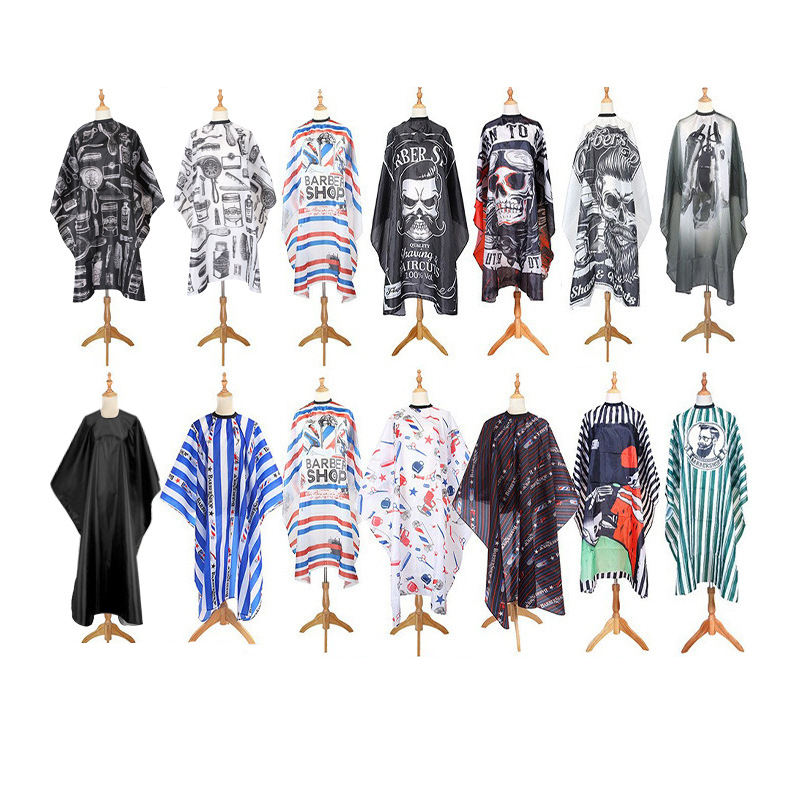
Choosing the correct barber cape size is a decision that directly affects client comfort, service quality, and operational efficiency in any salon or barbershop. A cape that is too small leaves clients exposed to hair clippings, chemical splashes, and water spray, while an oversized cape can feel heavy, restrict movement, and create an unprofessional appearance. For salons that serve a diverse clientele ranging from young children to adults, understanding the relationship between cape sizing, closure mechanisms, and service-specific coverage requirements is essential. This guide examines the practical considerations that barbers, salon managers, and B2B purchasing teams should evaluate when sourcing barber capes in bulk.
Understanding Standard Barber Cape Dimensions
Barber capes are generally manufactured in three size categories: child, standard adult, and large or extra-large. Child-size capes typically measure approximately 100 cm by 70 cm, providing adequate coverage for smaller frames without overwhelming the wearer. Standard adult capes, the most commonly stocked size, usually range from 120 cm to 140 cm in width and 70 cm to 90 cm in length, covering the shoulders and upper torso effectively. Large capes, measuring 150 cm or more in width, accommodate broader body types and are particularly useful for services that require extended coverage, such as full-color application or prolonged grooming sessions. Manufacturers like Yiwu Zhichao Cosmetics Co., Ltd., which produces barber capes alongside its core hair tool product lines, offer customizable sizing to meet the specific needs of OEM clients. Their factory, certified under BSCI, WCA, and ISO9001 standards, maintains consistent dimensional tolerances across production runs, which is a critical factor when ordering capes in bulk quantities.
Adjustable Neck Closures and Their Impact on Fit
The neck closure system is arguably the most important functional element of a barber cape, as it determines how securely and comfortably the cape sits on different clients. Snap closure systems, featuring multiple snap positions spaced along a collar band, allow a single cape to fit neck sizes ranging from roughly 28 cm to 48 cm in circumference. This adjustability is particularly valuable in high-traffic salons where quick transitions between clients of different ages and builds are routine. Hook-and-loop closures offer continuous adjustability but may lose grip strength over time and tend to accumulate hair debris. Magnetic closures, a newer innovation, provide one-handed operation and reduce the risk of catching hair in the mechanism. For B2B buyers, the choice of closure system should factor in the expected service volume, the typical client demographic, and the laundering method. Snap closures generally withstand industrial laundering cycles better than hook-and-loop alternatives, maintaining their functional integrity over a longer service life.
Coverage Requirements for Different Services
Different salon services place different demands on cape coverage. A standard haircut requires coverage of the shoulders and upper chest to catch clippings, making a standard adult cape with 120 to 140 cm width sufficient. Hair coloring services, however, involve chemical solutions that can drip or splash, necessitating a longer cape that reaches the lap or beyond to protect the client's clothing thoroughly. Some coloring-specific capes feature a waterproof or water-resistant outer layer combined with a soft inner lining, providing both protection and comfort. For grooming services such as beard trims and hot towel treatments, a shorter cape or a specialized grooming wrap may be more practical, as it allows easier access to the neck and jaw area without excess fabric interfering with the service. Salons that offer multiple service types may benefit from stocking a mix of cape sizes and styles, ensuring that each service is performed with appropriate protection.
Sizing Considerations for Adult Versus Child Clients
The distinction between adult and child cape sizing extends beyond simple dimensional differences. Child capes must account for shorter necks, narrower shoulders, and more sensitive skin. A child cape with a properly proportioned neck opening prevents the fabric from resting too close to the face, which can cause discomfort or anxiety in younger clients. Additionally, child capes often incorporate lighter materials and brighter colors or character designs to create a more welcoming experience. Adult capes, by contrast, prioritize durability and full coverage, with heavier fabric weights typically ranging from 180 to 250 grams per square meter. For salons that serve family clients, maintaining a dedicated stock of child-size capes alongside standard adult sizes ensures that every client receives appropriate coverage. A practical approach is to maintain a ratio of approximately one child cape for every four adult capes in a family-oriented salon, adjusting based on actual client demographic data.
B2B Bulk Sizing Strategy and Material Selection
For salon chains, distributors, and beauty supply companies purchasing barber capes in bulk, developing a comprehensive sizing strategy reduces waste and improves client satisfaction. A recommended starting assortment for a general-purpose salon includes 60 percent standard adult capes, 25 percent large adult capes, and 15 percent child capes, with adjustments based on the specific clientele. Material selection plays a significant role in the long-term value of the investment. Polyester-based fabrics with a water-resistant coating offer a good balance of durability, ease of cleaning, and cost effectiveness for high-volume environments. PVC-coated capes provide superior water resistance for coloring services but may feel less comfortable against the skin during extended wear. The inclusion of a fabric collar band, as opposed to a raw vinyl edge, improves both comfort and the longevity of the closure system. When evaluating suppliers, B2B buyers should request fabric swatches, test the closure mechanism after multiple laundering cycles, and verify that the manufacturer can maintain consistent sizing across repeat orders.
Case Study: Implementing a Multi-Size Cape Program in a Family Salon Chain
A regional family salon chain with 12 locations implemented a structured cape-sizing program after identifying inconsistent client experiences across its network. The chain had previously stocked only one size of adult cape at all locations, which resulted in inadequate coverage for larger clients and uncomfortable fits for children. After conducting a client demographic analysis, the chain adopted a three-tier cape system: child capes for clients under 12 years, standard adult capes for the majority of clients, and large capes for clients with broader frames or during coloring services. The capes were sourced from a manufacturer with injection molding and vertical integration capabilities, ensuring consistent quality and customizable closure options. Within three months of implementation, the chain reported a measurable improvement in client satisfaction scores related to comfort and cleanliness, and a reduction in the number of capes requiring replacement due to wear and tear. This case demonstrates how a deliberate approach to cape sizing, grounded in client demographics and service requirements, yields tangible operational benefits.
Q: What is the standard size for an adult barber cape?
A: The standard adult barber cape typically measures 120 to 140 cm in width and 70 to 90 cm in length, providing adequate shoulder and upper torso coverage for most adult clients during haircut services.
Q: How do adjustable neck closures accommodate different clients?
A: Adjustable neck closures use multiple snap positions or hook-and-loop fastening to fit a range of neck circumferences, typically from 28 cm to 48 cm, allowing a single cape to serve both adults and older children comfortably.
Q: What cape size is recommended for hair coloring services?
A: For hair coloring services, a larger cape with a length extending to the lap and a water-resistant outer layer is recommended to protect against chemical drips and splashes that standard haircut capes may not adequately block.
Table of Contents
- Understanding Standard Barber Cape Dimensions
- Adjustable Neck Closures and Their Impact on Fit
- Coverage Requirements for Different Services
- Sizing Considerations for Adult Versus Child Clients
- B2B Bulk Sizing Strategy and Material Selection
- Case Study: Implementing a Multi-Size Cape Program in a Family Salon Chain